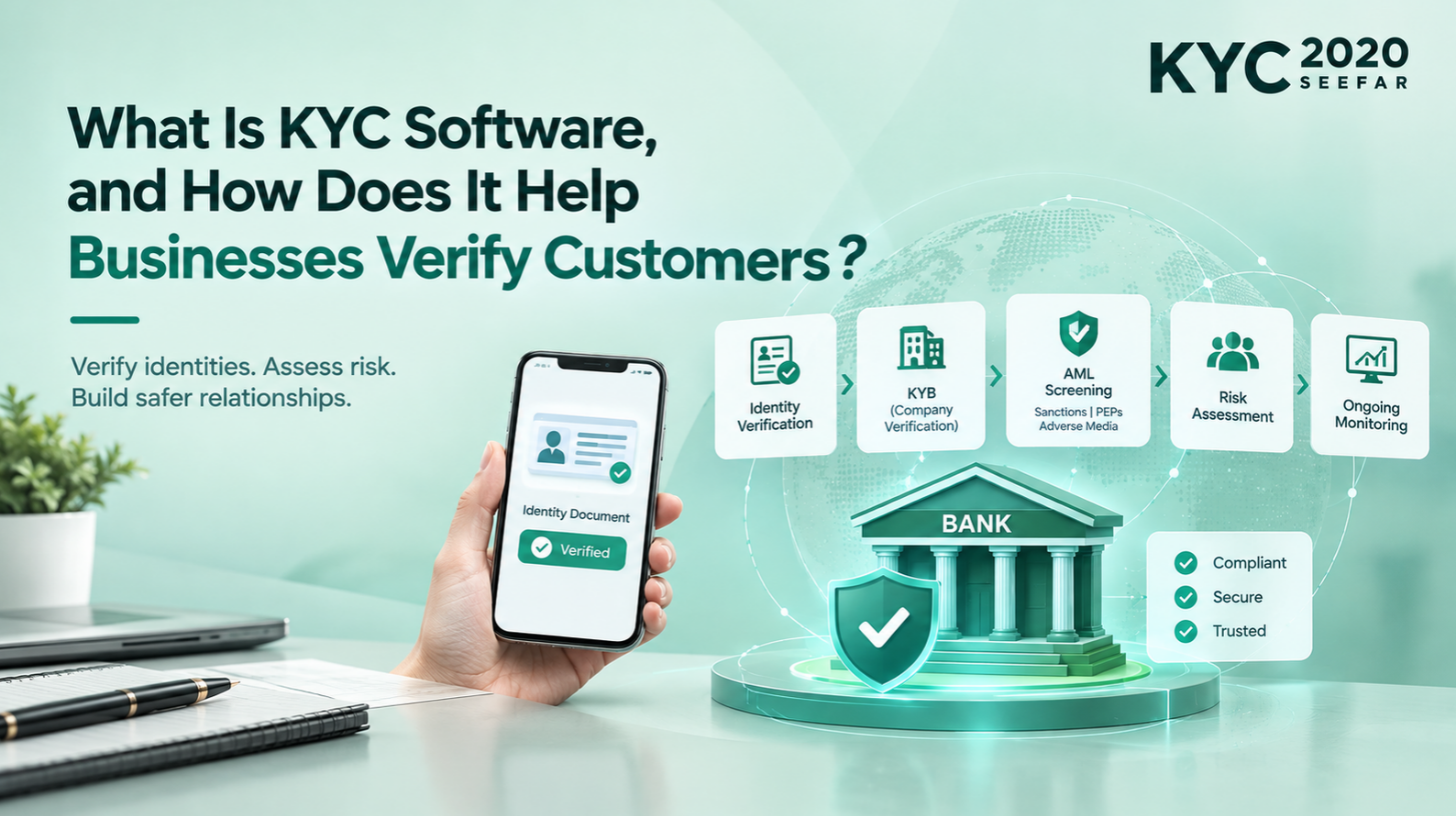
A bank approves a customer after onboarding checks. Weeks later, a sanctions list changes, new adverse media appears, or the customer’s risk profile shifts. If screening ends at account opening, yesterday’s clearance can become today’s blind spot.
Choosing Transaction screening software is not simply a search for the largest database or fastest match. Banks need a system that identifies relevant risk, explains its findings, supports proportionate decisions, and preserves evidence for review.
Start With The Risks Banks Must Detect
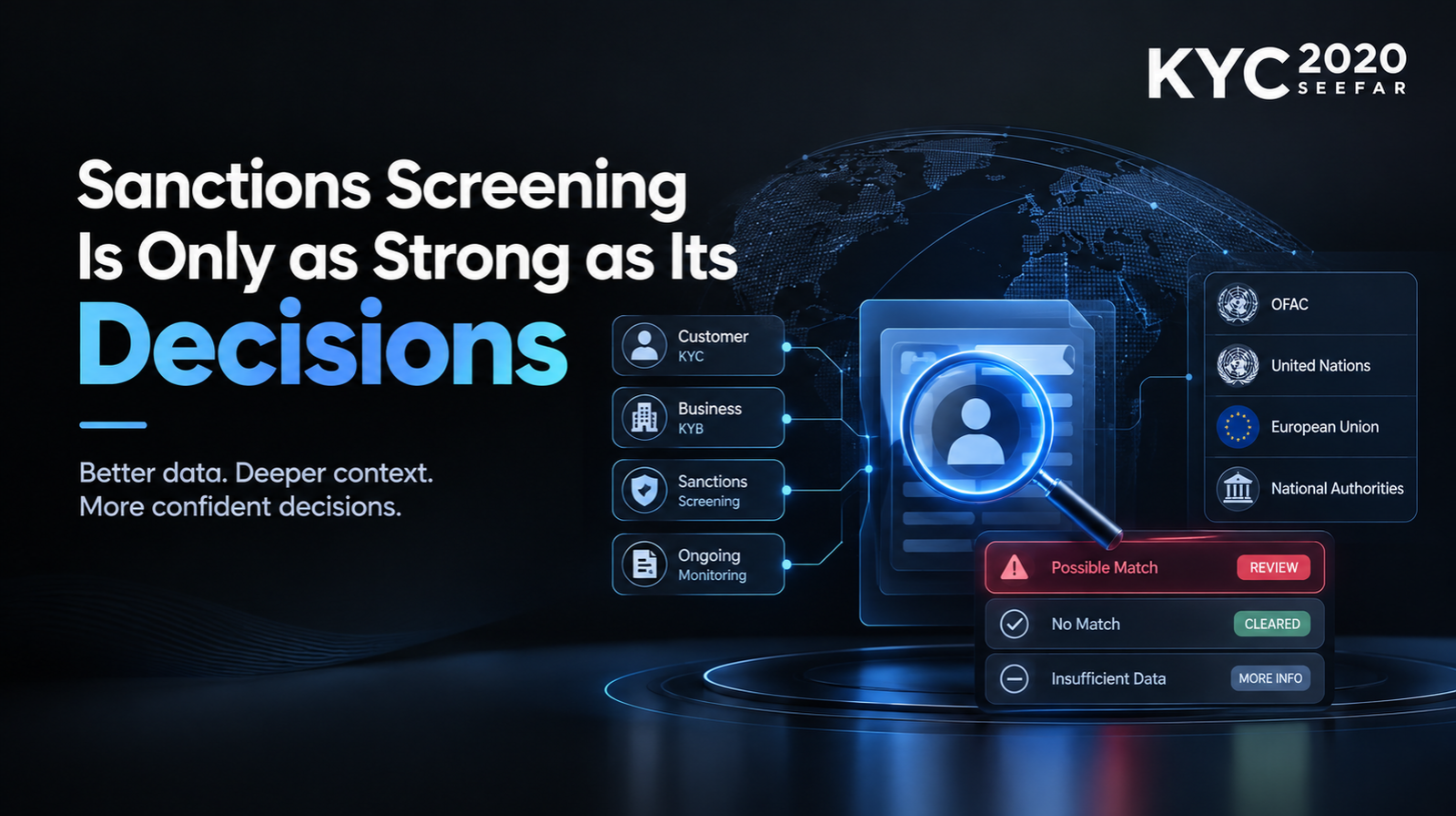
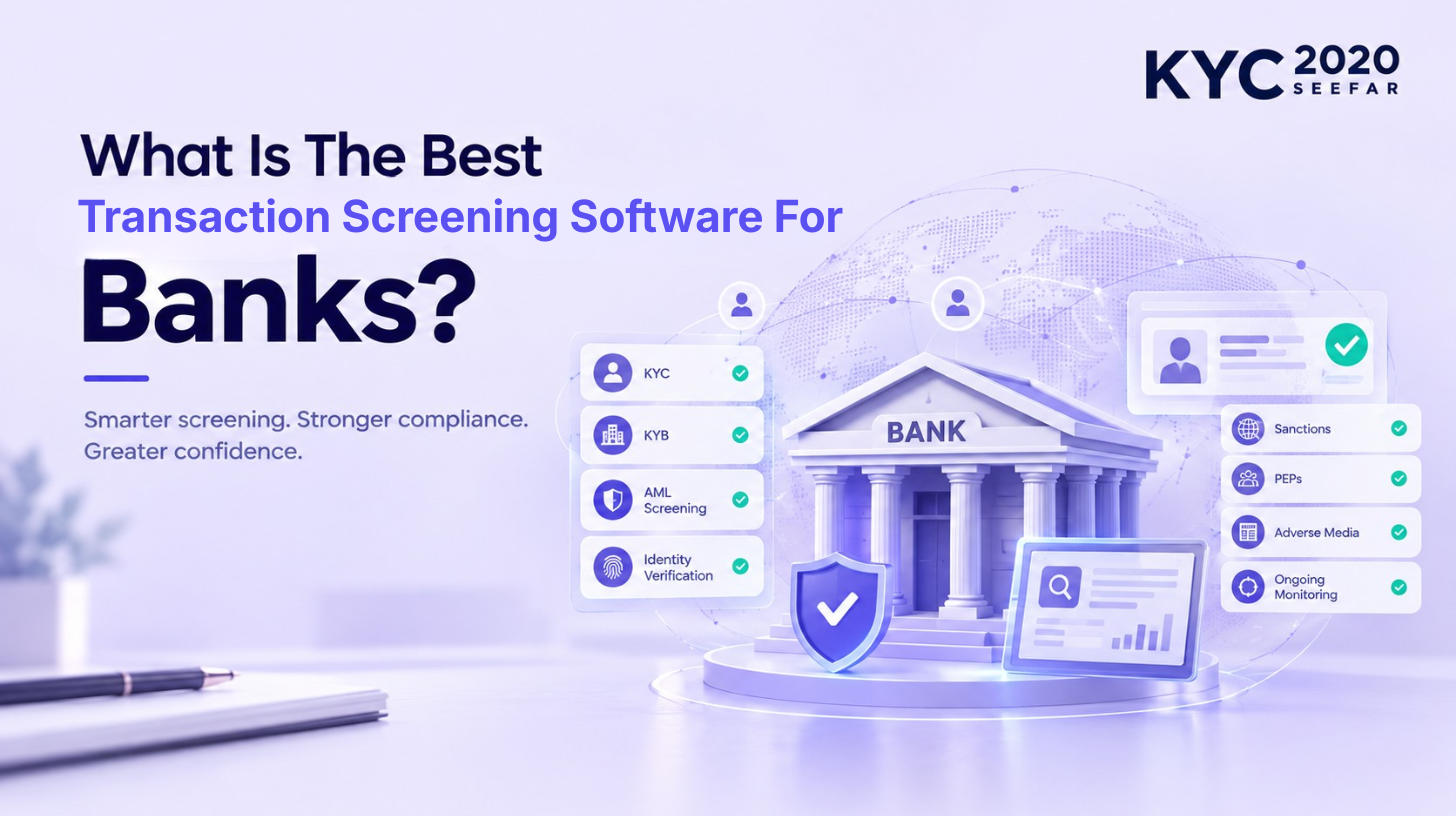
Transaction screening software helps banks assess individuals and businesses against sanctions lists, politically exposed persons (PEPs), relatives and close associates, regulatory enforcement records, and adverse media. The precise scope depends on jurisdiction, customer type, products.
Coverage matters, but list quantity alone is not proof of quality. Buyers should examine geographic reach, source reliability, update frequency, name variations, aliases, transliteration, and entity relationships. Incomplete or stale data can undermine even sophisticated matching technology.
Why Matching Accuracy Is More Than A Score
A customer’s name may resemble a listed person’s name without identifying the same individual. Exact matching can miss spelling variations; broad fuzzy matching may flood analysts with unrelated hits. Raising thresholds can reduce noise while also hiding genuine matches.
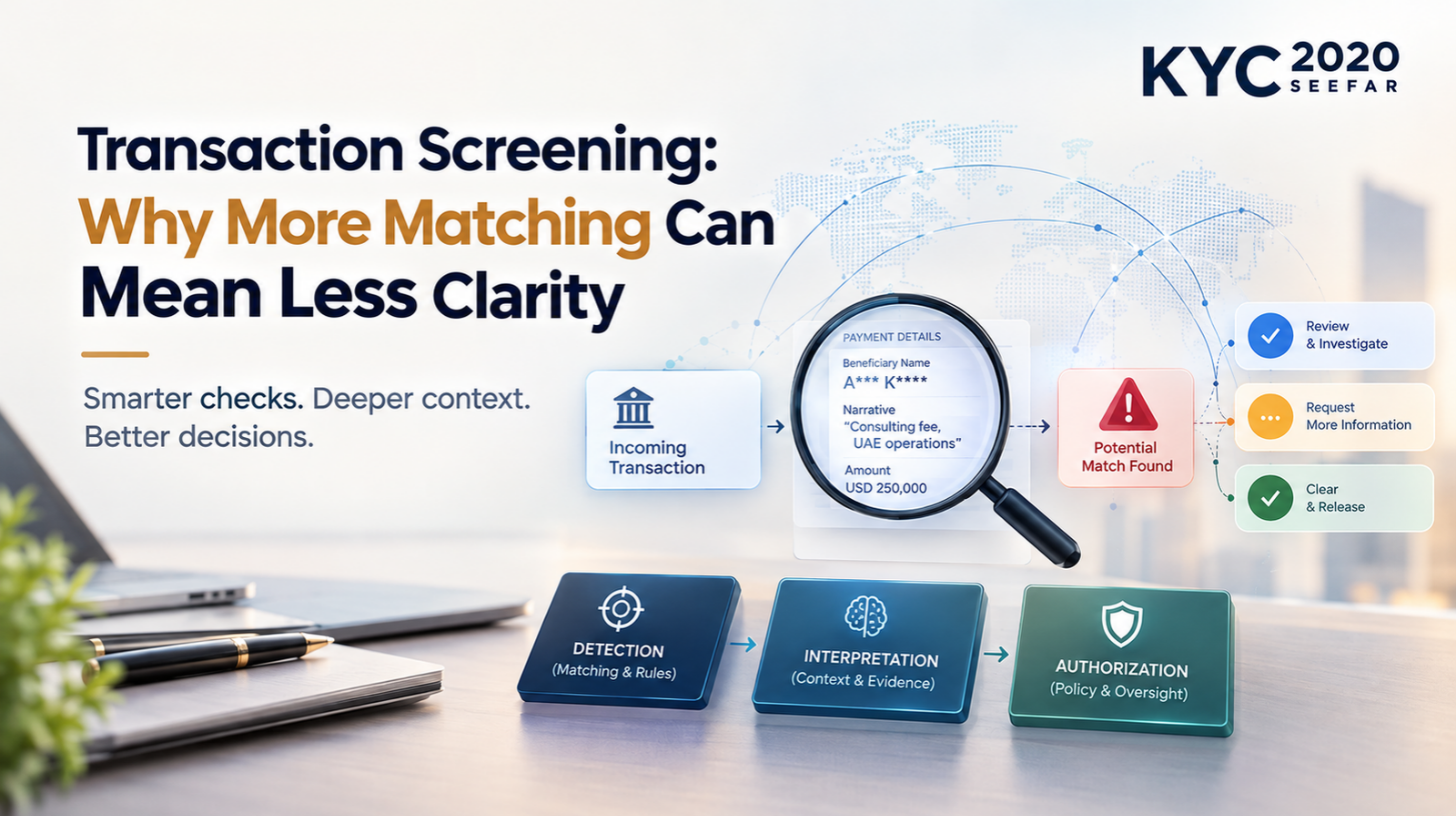
The approach separates candidate detection from decision-making. Matching identifies possible connections; contextual analysis compares identifiers such as date of birth, nationality, location, entity type, and aliases. Missing or conflicting details should remain visible. Uncertainty should trigger appropriate review, not automatic clearance.
What Bank-Grade Software Should Deliver
Risk-based screening: Configure rules and thresholds around customer risk, jurisdiction, and product exposure instead of applying one setting to every case.
Ongoing monitoring: Re-screen when watchlists change or risk information emerges. Define how alerts are assigned, investigated, escalated, and closed.
Explainable decisions: Give analysts the source record, matching rationale, evidence considered, and reasons behind a recommended disposition. A score without explanation is difficult to defend.
Case management and auditability: Keep reviewer notes, timestamps, list versions, rules applied, approvals, and final outcomes in a traceable record. Role-based access and maker-checker controls support consistent oversight.
Integration and resilience: Check API capabilities, batch screening, system compatibility, processing volumes, service reliability, data protection, access controls, and recovery arrangements.
Where AI Helps and Where It Should Stop
Contextual AI can help interpret names, distinguish records from coincidental matches, and organise evidence for analysts. But fluent explanations are not proof, and probabilistic outputs should not silently override bank policy.
Look for a governed workflow that combines contextual analysis with deterministic rules, exposes uncertainty, and routes difficult cases to trained reviewers. Test it with common names, transliterations, incomplete records, genuine matches, and examples. Measure false positives alongside missed-match testing, review time, escalation quality, and audit findings.
Frequently Asked Questions
1. What does Transaction screening software do?
It checks customers against sanctions, PEP, regulatory, and other risk records to support due diligence.
2. Do banks need ongoing screening?
Yes. Risk records and customer circumstances can change after onboarding, requiring appropriate monitoring.
3. How does software reduce false positives?
It combines reliable data, identifier comparison, contextual analysis, configurable rules, and review workflows.
4. Should AI make final compliance decisions?
AI can support analysis, but decisions should follow approved policy and appropriate human oversight.
5. What data sources should banks check?
Review sanctions, PEP, regulatory, adverse media, and other sources relevant to the bank’s risk profile.
6. Can Transaction screening software integrate with banking systems?
Many platforms offer APIs and batch processing; banks should verify compatibility, security, and scale.
7. How should banks evaluate vendors?
Use representative test cases and assess coverage, accuracy, auditability, integration, security, and total operating cost.
So, Which Software Is Best For A Bank?
The best Transaction screening software is the one that fits the bank’s regulatory footprint, customer risk, transaction volumes, existing systems, and governance requirements—not necessarily the one with the longest feature list.
KYC2020 offers sanctions, PEP, relatives and close associates, regulatory, high-risk business, and adverse media screening, supported by contextual AI, rule-based decisioning, ongoing monitoring, case management, and Proof-of-Decision records. Banks should validate these capabilities against their scenarios, data requirements, security standards, and procurement criteria before selecting a provider.
An evaluation asks vendors to demonstrate the full journey: source data, potential match, contextual assessment, rule application, human review, and audit record. Compare performance on the same test cases and verify claims with documented evidence. Effective screening does not promise zero alerts. It helps banks find meaningful risks, resolve uncertainty consistently, and show how each decision was reached.