A customer submits an identity document, enters an address and waits for approval. Behind the scenes, a business must determine whether the information is genuine, whether the applicant is who they claim to be, and whether the relationship presents a risk. If these checks rely on disconnected tools and manual reviews, onboarding slows while inconsistencies can slip through.
Know Your Customer (KYC) is not simply a form to complete. It is a process for establishing identity, understanding risk, and keeping customer information reliable.
What KYC software actually does
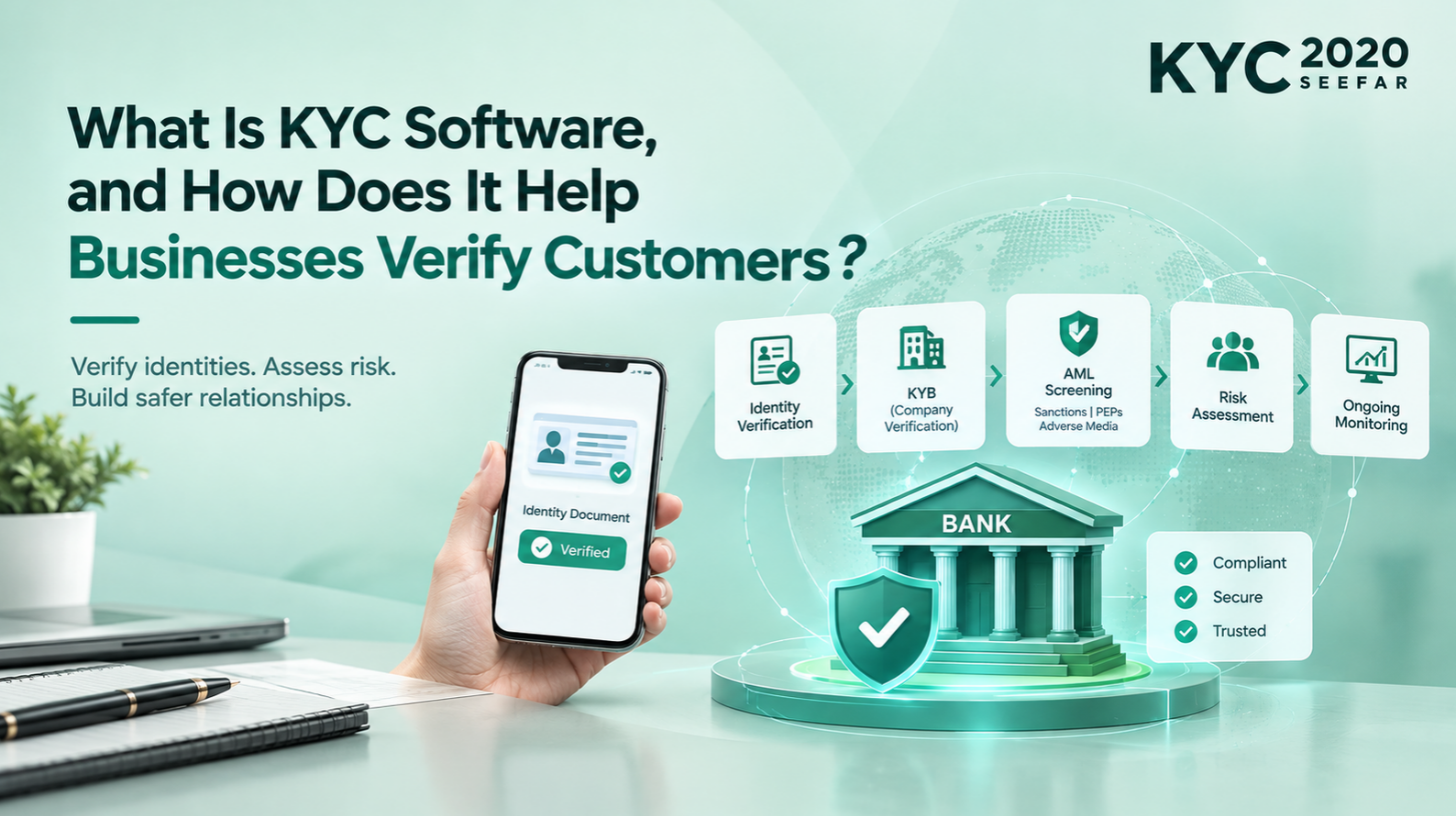
KYC software helps businesses collect, verify and assess customer information in a workflow. Depending on the product and risk policy, it may support document verification, identity checks, beneficial ownership identification, sanctions and politically exposed person (PEP) screening, adverse media checks, case management, and ongoing monitoring.
These functions serve different purposes. Document validation checks whether an identity document appears authentic; identity verification assesses whether the person presenting it matches the document. Screening compares customer details with risk records. Combining the results can support a more informed decision, but one successful check does not prove that every risk has been resolved.
Why manual verification reaches its limits
A business may receive customer records in different formats, rely on several data providers, and ask separate teams to review identity documents, screening alerts, and missing information. Each handoff creates opportunities for delay, duplication, and inconsistent decisions.
Automation can standardize steps, but automating a weak process only makes its weaknesses faster. Optical character recognition may extract a name incorrectly. A genuine customer may share a name with a sanctioned person. A document may be valid while the information supplied elsewhere conflicts with it. Effective KYC workflows must identify these exceptions instead of treating every completed check as approval.
From collected data to a risk-based decision
Verification begins with reliable inputs. The system may extract document fields, compare them with application details, validate document features and check whether identity information is consistent. Additional checks can corroborate the customer’s identity.
The next step is risk assessment. Sanctions screening looks for restrictions; PEP screening identifies politically exposed individuals and associated risk factors; adverse media screening searches for reporting that may indicate financial crime or other concerns. These findings are not interchangeable, and a potential match is not proof of wrongdoing.
A workflow brings the evidence together, highlights contradictions and routes uncertain cases to trained reviewers. Risk-based rules can determine when standard checks are sufficient and when enhanced due diligence, additional documents or senior approval is required. The rationale should be recorded so a later reviewer can understand what was checked and why the outcome was reached.
What happens after onboarding?
Approval is not a permanent guarantee. A customer’s details may change, sanctions lists may be updated, or new information may alter the assessed risk. Depending on the customer and applicable obligations, ongoing monitoring can trigger a review when relevant records change or a scheduled reassessment becomes due.
This is where a KYC process must connect onboarding with monitoring. If information is stored in separate systems without clear ownership, teams may miss updates or repeat checks unnecessarily. A unified case history helps preserve the original evidence, subsequent alerts, reviewer actions and reasons for changing a decision.
How to evaluate KYC software
Businesses should assess more than the speed of an identity check. Examine data coverage, source freshness, document and identity verification methods, screening quality, integration options, privacy controls, access permissions, and audit trails. Test common names, transliterations, incomplete applications, altered documents and genuine risk matches — not only demonstration cases.
Useful measures include completion time, manual-review rates, false-positive levels, missed-match testing, abandonment, and audit findings. Faster onboarding is valuable only when it does not come at the expense of reliable verification. No platform removes the need for clear policies, appropriate data handling, and accountable human judgment.
KYC2020 provides AML screening and onboarding solutions, including DecisionIQ for advanced screening and ongoing monitoring. Businesses should assess how any platform’s capabilities align with their own regulatory obligations, risk appetite, and operating model.
Effective KYC software does more than collect documents or produce a pass-or-fail result. It connects identity evidence, risk checks, and review procedures into a traceable process. When the evidence is strong, decisions can move forward efficiently. When it is incomplete or conflicting, the system should make the uncertainty visible and direct it to the right person. That balance helps businesses welcome legitimate customers while maintaining a defensible approach to risk.