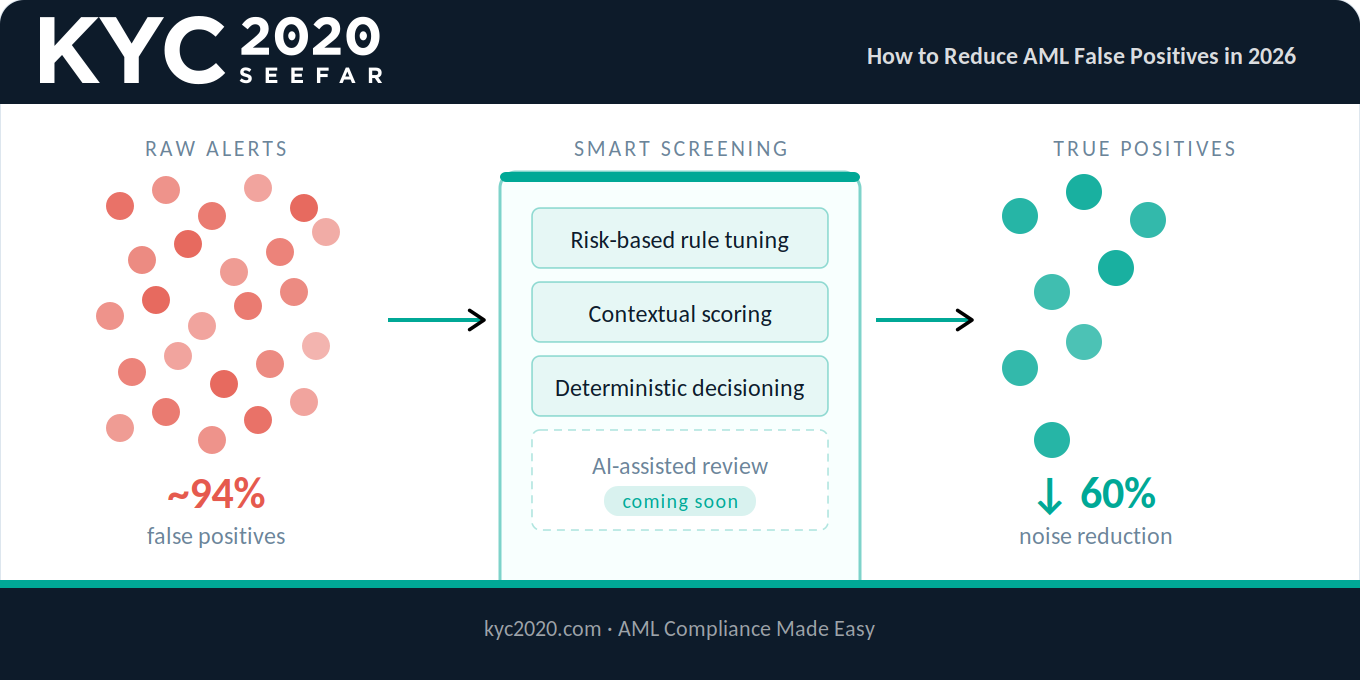
Reducing AML False Positives: A Practical Guide for Compliance Teams AML false positives are one of the most expensive problems in financial compliance. Every time your screening system flags a legitimate customer as a potential match, a compliance analyst must…
AML Policy for Fintech Startups
Everything You Need to Know About KYC Regulations
In today’s digital age, businesses must comply with Know Your Customer (KYC) regulations. If you’re unfamiliar with the term, KYC is a process of verifying the identity of customers. It helps companies identify and prevent fraud and money laundering, ensuring…
Understanding the Basics of AML Regulations
Anti-Money Laundering (AML) regulations are in place to help protect financial institutions from illegal activities. These regulations set out requirements for financial institutions to identify, monitor and report suspicious transactions that could be related to money laundering or terrorist financing.…
Why is an AML Policy so important?
For more than 30 years, the Financial Action Task Force (FATF) has been the global standard by which many countries have wholeheartedly adopted the measure to combat Money Laundering and Terrorist Financing(ML/TF). Since the FATF first started in the late…