Imagine on boarding hundreds of customers daily while screening thousands of records, investigating potential matches, and responding to changing regulatory requirements. A single overlooked identity discrepancy could expose a business to financial crime, regulatory penalties, or reputational damage. Meanwhile, excessive verification delays can frustrate legitimate customers and overwhelm compliance teams. This is the challenge modern compliance operations must address. KYC software can connect customer verification, screening, investigation, and record keeping, but its effectiveness depends on how intelligently these processes work together. A platform that simply collects documents or generates alerts may digitise existing inefficiencies without reducing risk.
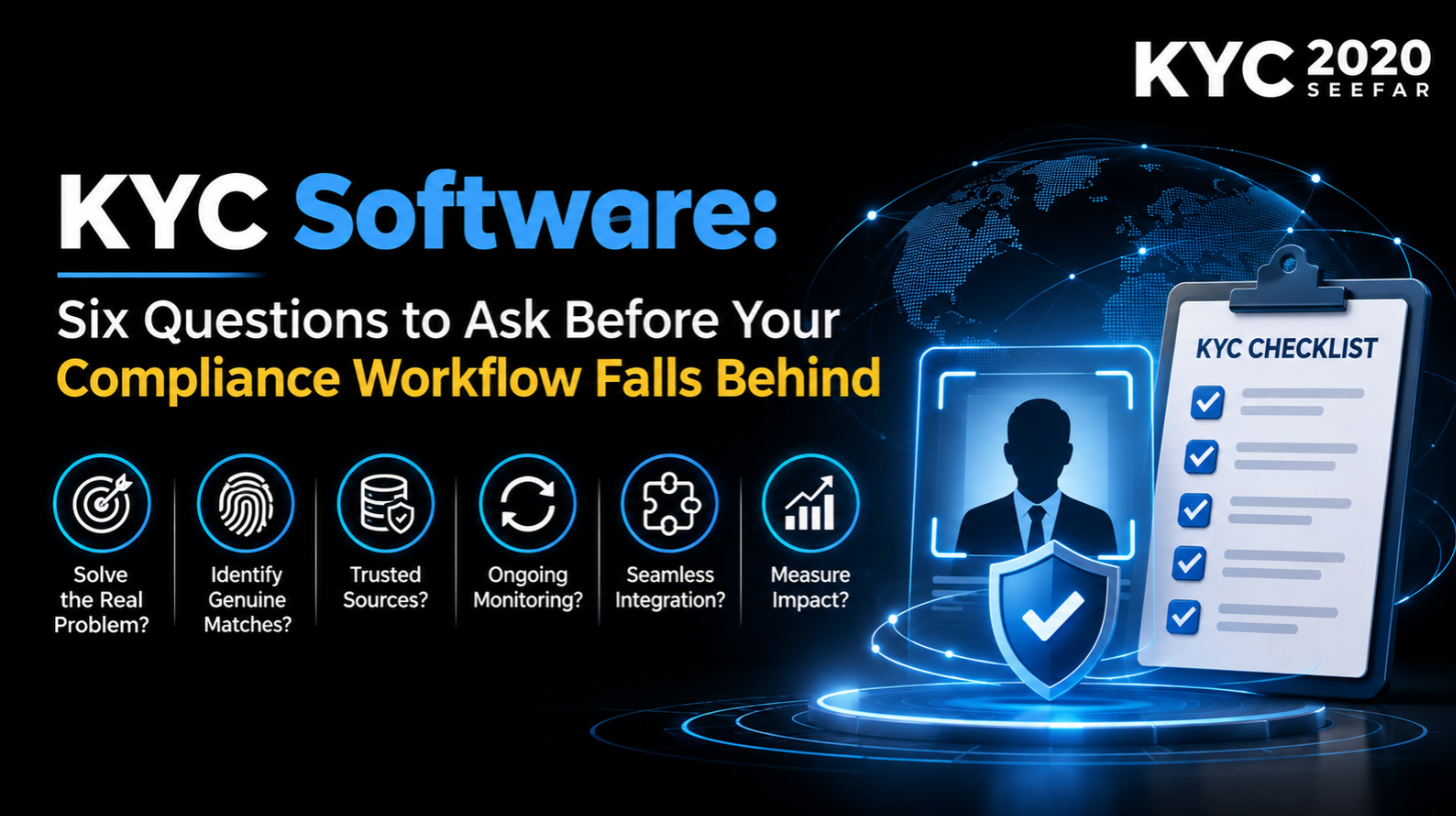
Before selecting a solution, businesses should ask six questions that reveal whether its technology can support reliable, explainable, and risk-based decisions.
Does the software solve the actual problems in your KYC workflow?
Start by examining where verification becomes inefficient. Are analysts repeatedly checking similar names? Do onboarding applications remain pending because information is scattered across systems? Are investigators spending more time clearing irrelevant alerts than examining meaningful risks?
An effective platform should connect customer identification, due diligence, screening, investigation, and case management. More importantly, it should preserve the relationship between the information collected and the decisions made from it.
Automation alone is insufficient. If inaccurate data enters the workflow or exceptions are handled inconsistently, faster processing simply accelerates unreliable decisions.
Can it distinguish a genuine identity match from a similar name?
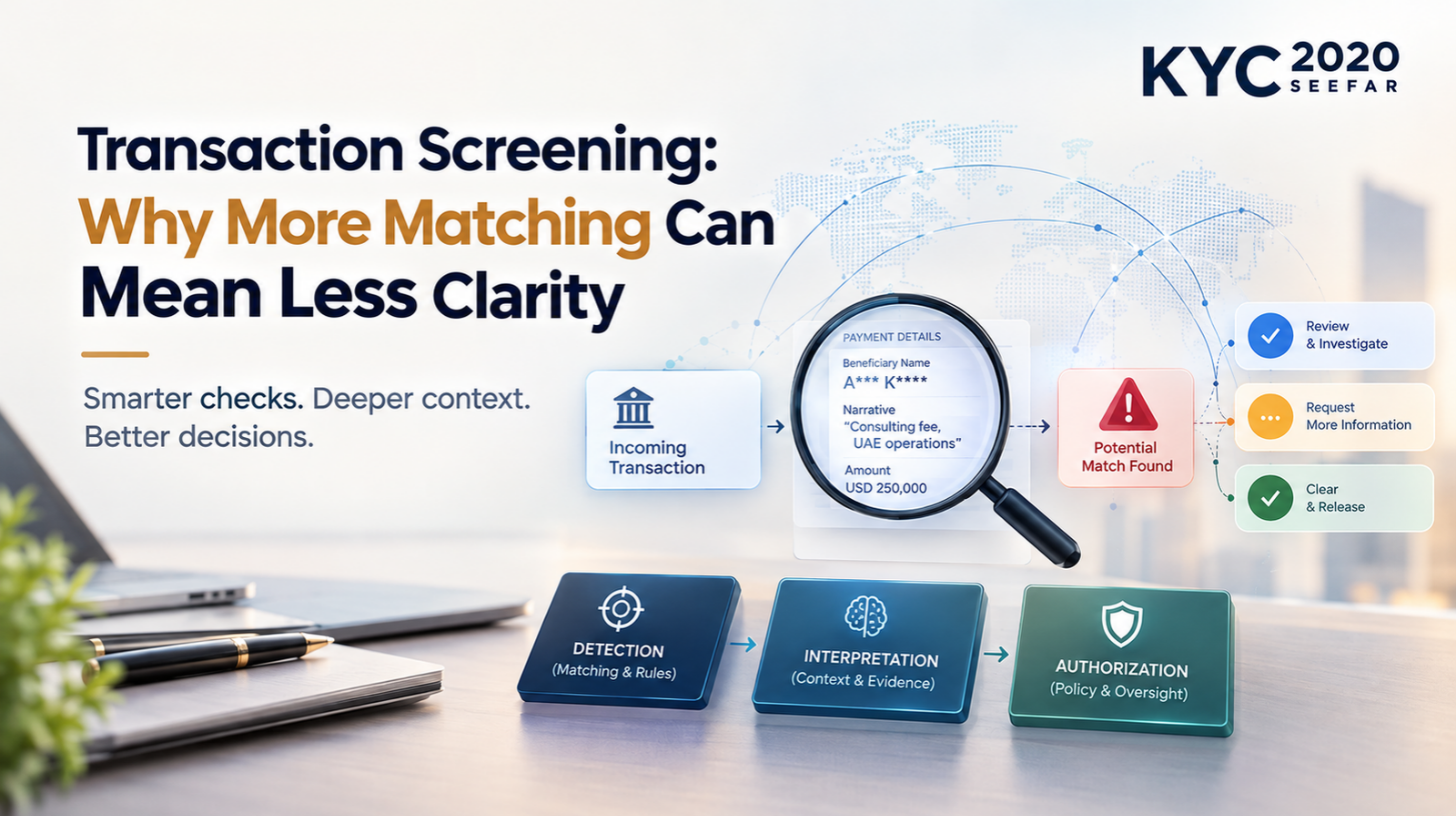
A name appearing on a sanctions or PEP list does not automatically establish that the customer is the listed individual. Two people may share a name while having entirely different dates of birth, nationalities, locations, and professional backgrounds.
Exact matching can overlook spelling variations, aliases, and transliterations. Broad fuzzy matching can generate numerous irrelevant alerts. This creates a recall-versus-precision challenge: improving detection without overwhelming investigators with false positives.
Ask how the platform compares multiple identifiers, handles missing information, and explains potential matches. Contextual analysis can help interpret relationships between records, but uncertain cases must remain visible for human review. A similarity score should identify a candidate, never substitute for an identity determination.
Are the screening sources reliable, relevant, and regularly updated?
Screening quality depends on the information being examined. A large database is not necessarily a reliable one. Businesses should understand whether coverage includes sanctions lists, politically exposed persons (PEPs), regulatory notices, and adverse media.
Ask about source provenance, update frequency, historical records, duplicate entries, and the visibility of supporting information.
Adverse media requires particular attention. An article might mention someone as a witness, victim, associate, or subject of an allegation. Treating every mention as evidence of wrongdoing creates misleading risk assessments. Effective analysis must establish who is being discussed, what the report actually states, and whether the information is relevant to the customer being investigated.
Does verification continue throughout the customer lifecycle?
Customer verification should not end when an application is approved. Sanctions designations change, individuals assume politically exposed positions, ownership structures evolve, and new reporting can alter an existing risk assessment.
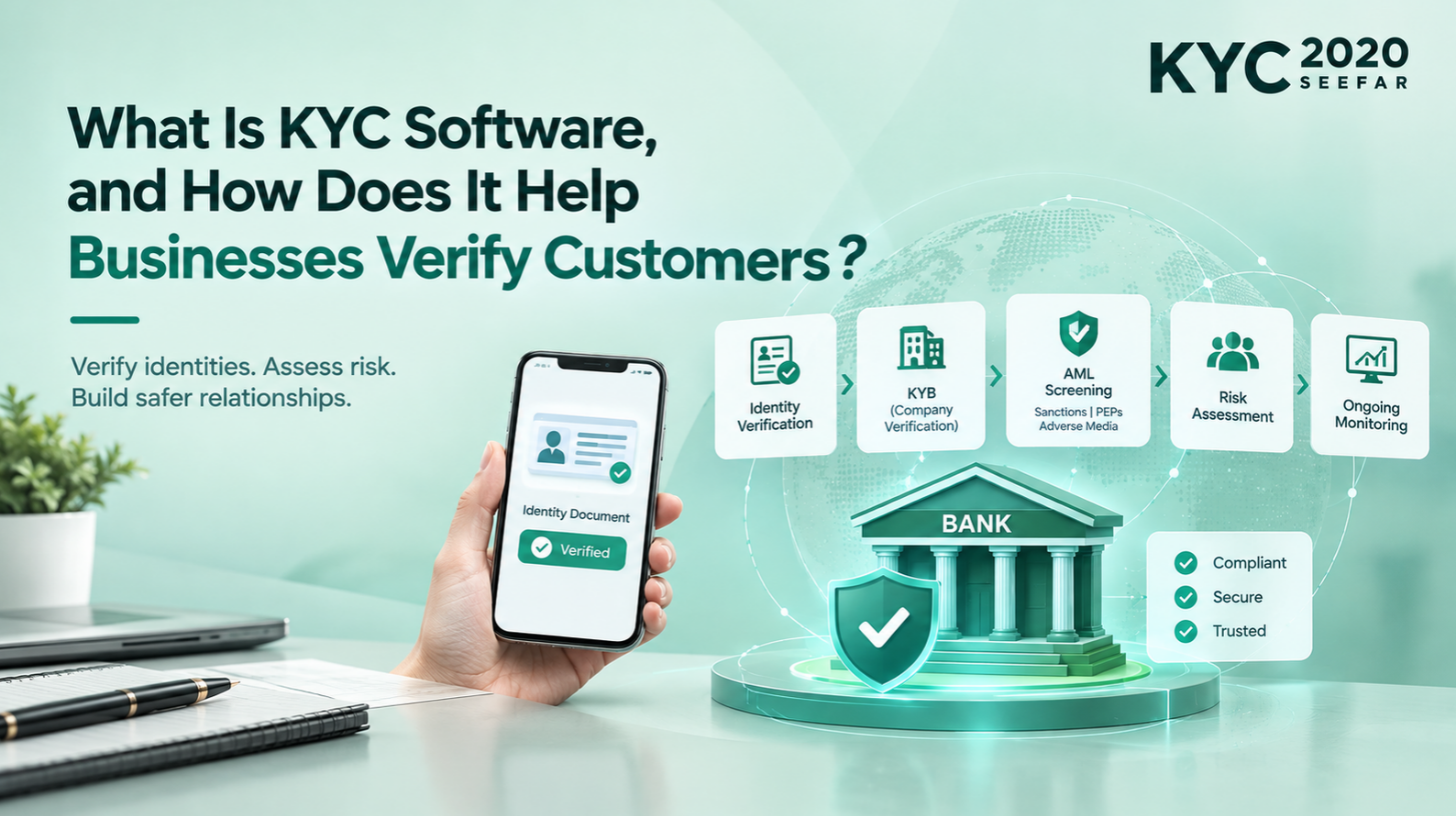
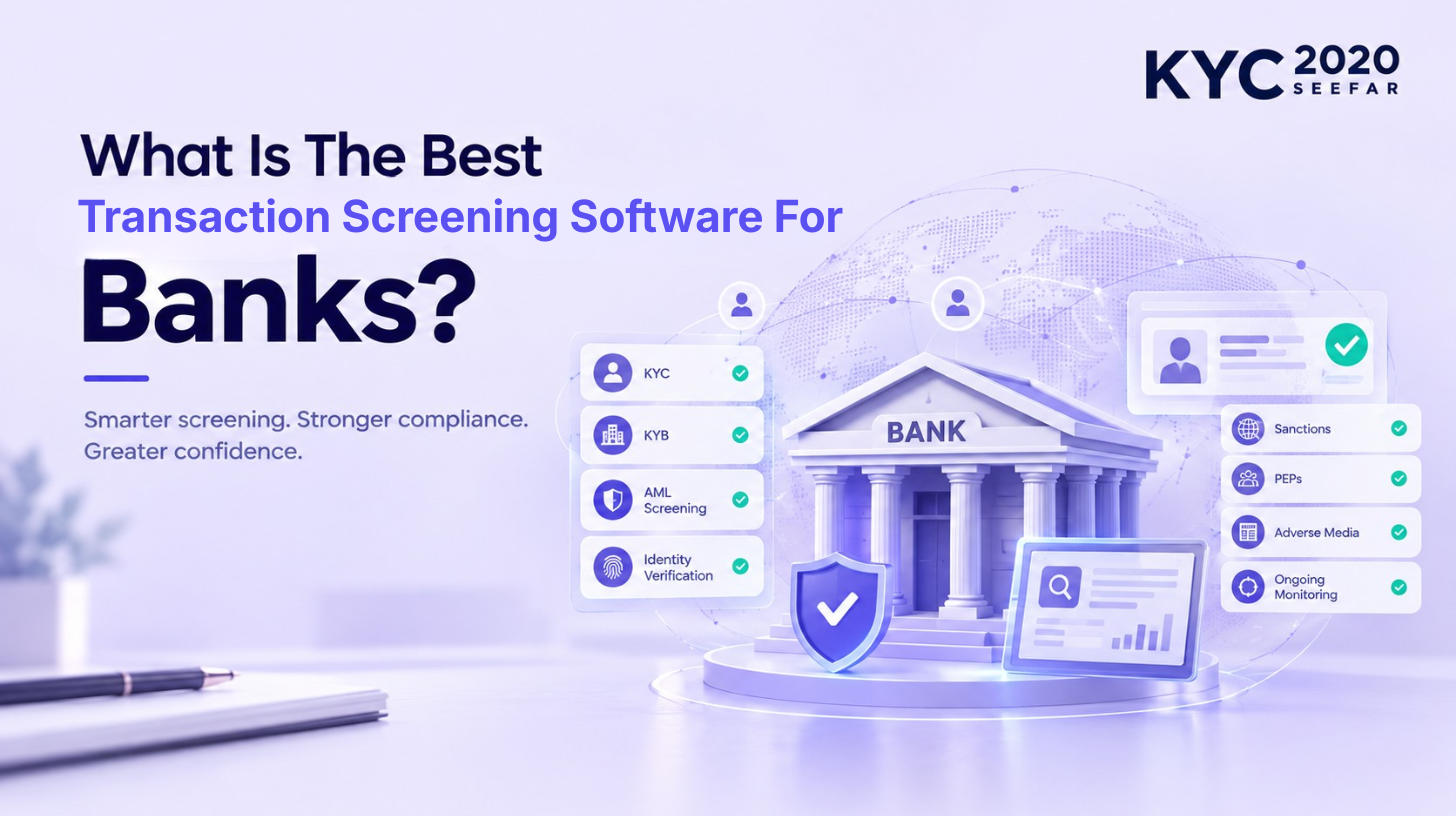
Ask whether the platform supports ongoing monitoring, periodic reviews, and alerts triggered by relevant changes. For corporate customers, KYB checks should help identify directors, shareholders, and ultimate beneficial owners. Payment operations may additionally require screening of relevant transaction parties.
The objective is to connect initial verification with subsequent risk developments while maintaining a traceable history of previous checks and decisions.
Can it integrate with existing systems without compromising accountability?
A screening platform should complement existing operations rather than create another isolated database. Examine API availability, batch-processing capabilities, case management, access permissions, data protection, and deployment requirements.
Equally important is decision governance. Can compliance teams configure risk-based rules, escalation thresholds, and approval procedures? Can investigators see the evidence behind an alert and understand why it was cleared or escalated?
AI-assisted analysis can improve information interpretation, but technology must not obscure responsibility. Documented rules, authorised approvals, and audit trails should establish how consequential decisions are reached.
How will you measure whether the investment improves compliance?
Before implementation, establish measurable performance indicators. These may include onboarding completion time, false-positive rates, investigation turnaround, manual-review volumes, missed-match testing, and audit completeness.
Test the platform using realistic scenarios: common names, transliterated identities, incomplete applications, conflicting identifiers, and genuine risk matches. Compare the results against existing workflows.
Fewer alerts do not necessarily indicate better screening. A reduction achieved by suppressing legitimate matches can create greater exposure than the original problem. Performance must be evaluated through both operational efficiency and detection quality.
Frequently Asked Questions
- What does KYC software do?
KYC software helps businesses verify customer identities, assess risk, conduct screening, investigate alerts, and document due diligence.
- Is KYC different from AML?
KYC establishes customer identity; AML encompasses broader measures against money laundering and associated financial crime.
- What is adverse media screening?
It examines news sources for reporting that may indicate financial, regulatory, or reputational risks.
- Why do screening systems generate false positives?
Similar names, incomplete identifiers, transliterations, and broad matching rules can produce irrelevant alerts.
- Is ongoing customer monitoring necessary?
Yes. Changes in customer circumstances, sanctions status, and risk information can require reassessment after onboarding.
- Can KYC platforms integrate with existing business systems?
Many support APIs and batch processing, but compatibility, security, and implementation requirements must be evaluated.
Are your compliance decisions becoming more defensible?
The right technology should make investigations more focused, verification more consistent, and decisions easier to explain. KYC2020’s compliance technology portfolio includes advanced screening and monitoring capabilities designed to support informed risk assessment.
Ultimately, successful implementation should not be measured by how quickly a platform produces an approval or clears an alert. It should be measured by the quality of evidence behind each decision, the risks identified, and the organisation’s ability to demonstrate how it fulfilled its due diligence responsibilities.