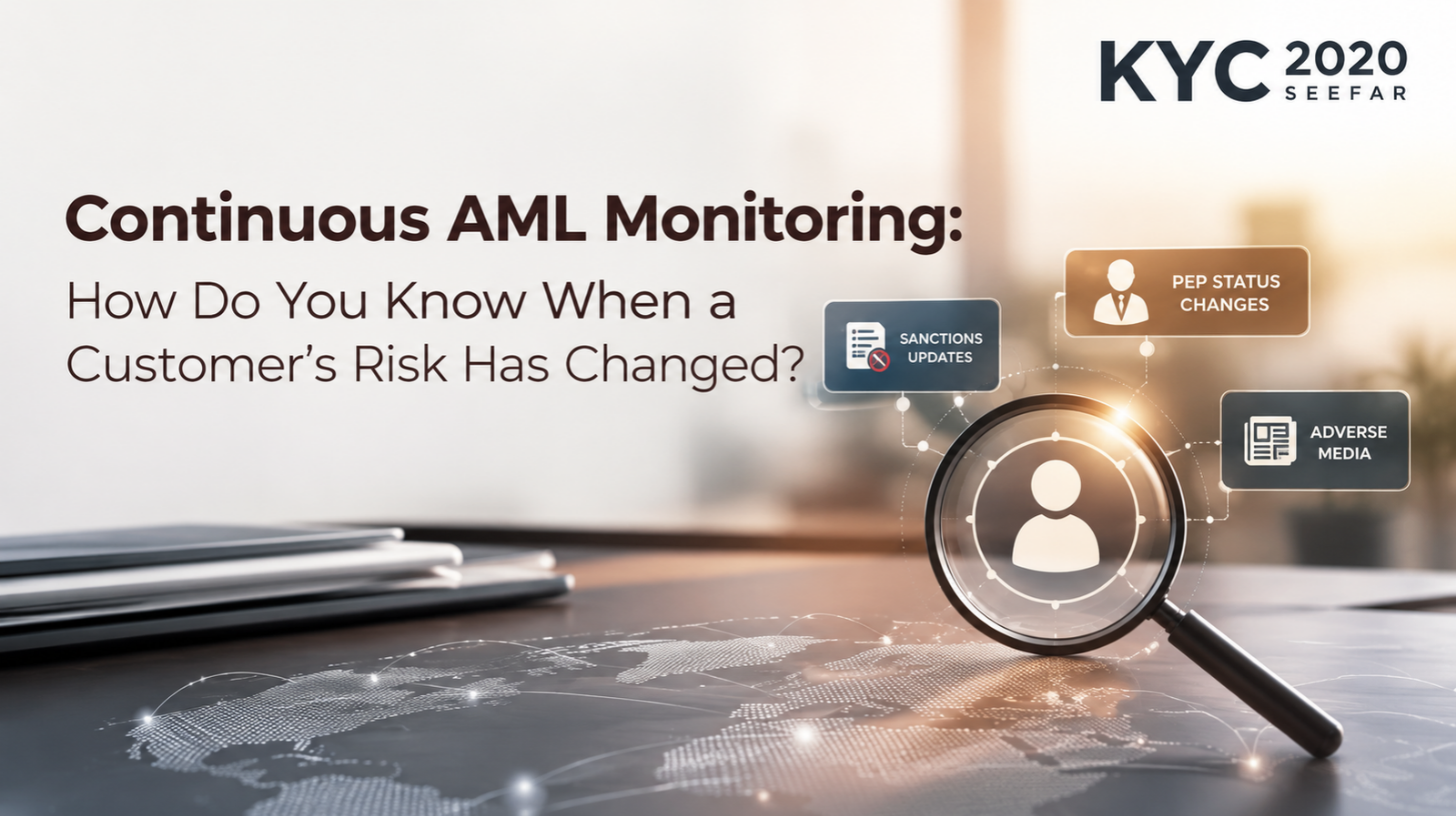
A bank screens a customer during onboarding and clears the name. Weeks later, a sanctions list changes, or new information raises concerns about the customer. If screening stopped at account opening, the original decision may no longer reflect the current risk.
This illustrates why choosing KYC screening software is not simply a contest over database size or processing speed. Banks need to identify meaningful risks, distinguish genuine matches from unrelated namesakes, and explain how each decision was reached.
What should the best KYC screening software for banks deliver?
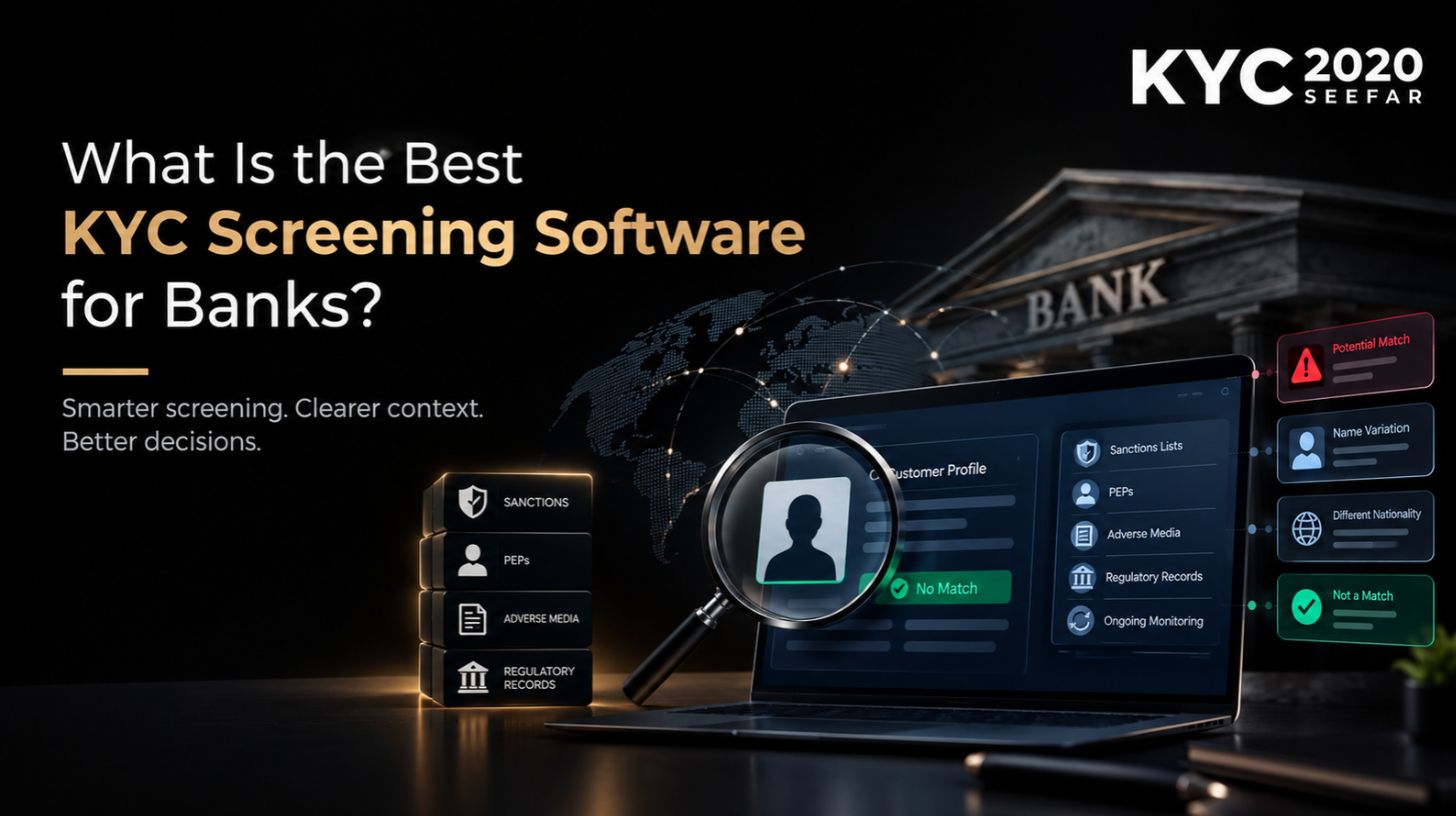
Effective software screens individuals, businesses and beneficial owners against sanctions lists, politically exposed persons (PEPs), relatives and close associates, regulatory records and adverse media. It should support onboarding, periodic reviews and ongoing monitoring.
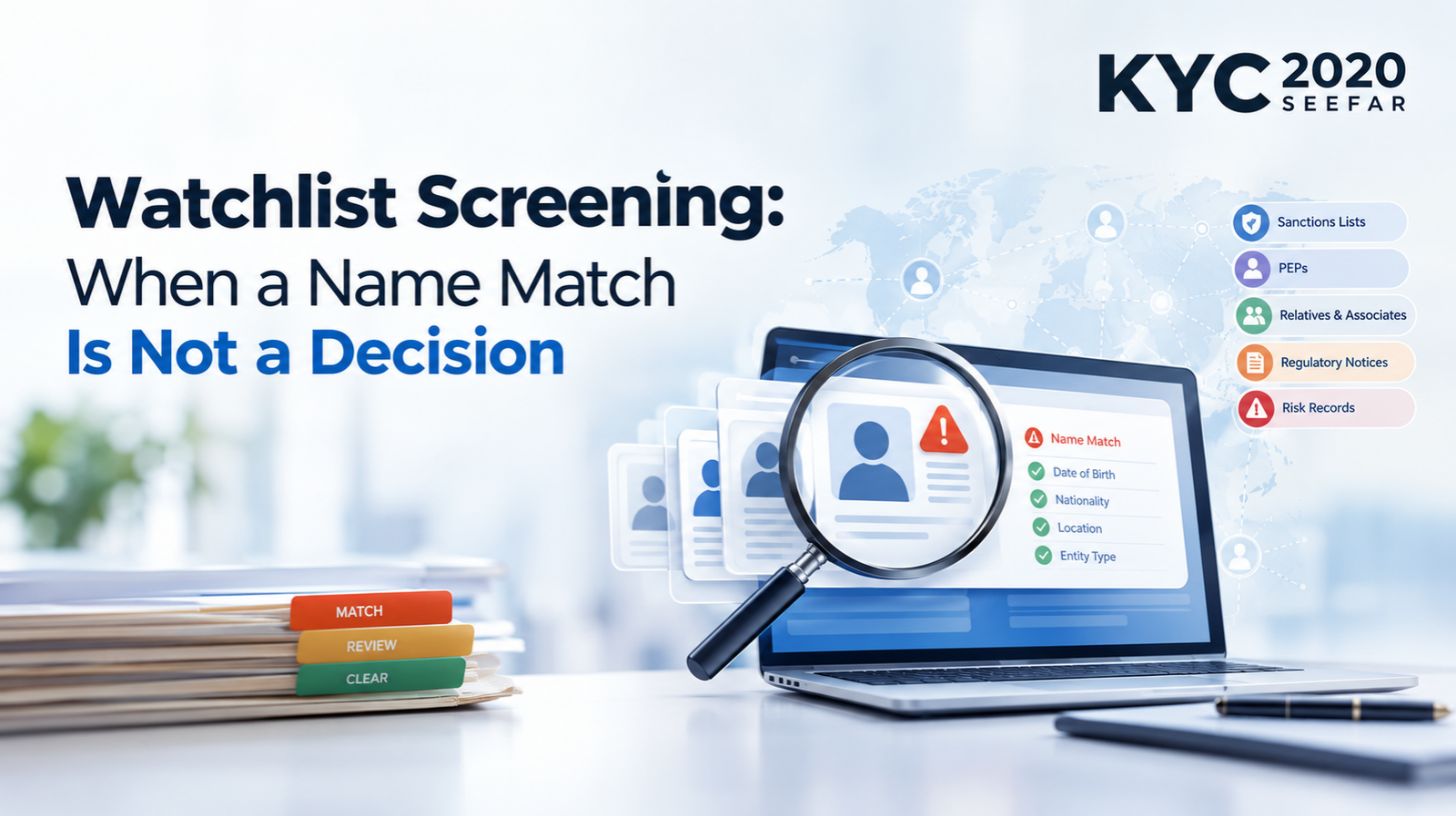
However, comprehensive coverage alone is insufficient. Names can appear in different scripts, transliterations and aliases. Customer records may contain incomplete dates of birth, outdated addresses or inconsistent company information. Exact matching can miss relevant records, while broad fuzzy matching can overwhelm analysts with false positives.
A reliable system compares multiple identifiers, highlights relevant similarities and differences, and explains why a record was flagged. This helps analysts investigate potential risks without treating every name match as a confirmed identity.
Why more matches do not necessarily mean better detection
Consider two customers whose names resemble that of a sanctioned individual. The first has a different date of birth and nationality. The second shares several identifiers but uses a different spelling of the listed name.
A simplistic matching system might flag both cases similarly or overlook the second because of its spelling variation. Analysts must then spend time separating irrelevant alerts from potentially significant matches.
This is the recall-versus-precision trade-off. Tightening matching thresholds can reduce false positives but may also hide genuine matches. Relaxing them can improve detection while increasing the review queue.
Banks should therefore test software against common names, transliterations, incomplete profiles and known matches. Performance assessments should measure false-positive rates alongside missed matches, investigation time and escalation quality.
Separate contextual analysis from compliance decisions
Artificial intelligence can help interpret context, prioritise alerts and explain why two records may refer to different individuals. Yet an AI-generated explanation is not proof of identity.
A defensible workflow should preserve the original source, list version, identifiers compared, evidence considered, applicable rules and final disposition. If evidence conflicts or remains incomplete, the case should be escalated instead of automatically cleared.
KYC2020 offers sanctions, PEP and adverse media screening, alongside ongoing monitoring and case-management capabilities. Its DecisionIQ approach combines contextual analysis with rule-based decisioning and documented outcomes. Banks should verify these capabilities through demonstrations, sample cases and evidence of performance against their own requirements.
How should banks evaluate a screening platform?
The evaluation should extend beyond feature lists. Banks need to examine:
- Data coverage: Relevant jurisdictions, list sources, aliases and update frequency.
- Matching quality: Handling of transliterations, incomplete identifiers and similar names.
- Workflow management: Alert prioritisation, escalation, reviewer assignments and case histories.
- Integration: API and batch-screening options, compatibility with existing banking systems and implementation effort.
- Governance: Access controls, audit trails, data protection and explainable decisions.
- Ongoing monitoring: Reliable detection of changes affecting existing customers.
Frequently Asked Questions
- Is KYC screening software the same as identity verification?
No. Identity verification establishes whether a claimed identity is genuine. KYC screening checks whether a person or business matches risk records, such as sanctions listings or PEP information. Banks may require both.
- Should banks screen customers after onboarding?
Yes. Sanctions lists change, individuals may become politically exposed, and new adverse information can emerge. Ongoing monitoring helps identify developments that an initial check could not capture.
- Can AI eliminate false positives?
No. AI can improve contextual interpretation and help prioritise alerts, but it cannot guarantee error-free screening. Evidence validation, appropriate rules and human oversight remain essential.
- How can banks compare vendors objectively?
Use representative test cases, assess missed matches and false positives, inspect audit records, and evaluate integration requirements. Compare demonstrated performance rather than relying solely on vendor claims.
Choose Software That Makes Every Screening Decision Defensible
Vendors should demonstrate difficult cases, not merely successful matches. Testing should establish whether the system supports the bank’s risk appetite, operational volumes, and regulatory obligations.
Ultimately, the best KYC screening software is not the platform that generates the fewest alerts at any cost. It is the one that identifies meaningful risk, handles uncertainty consistently, and enables the bank to explain and defend its decisions.