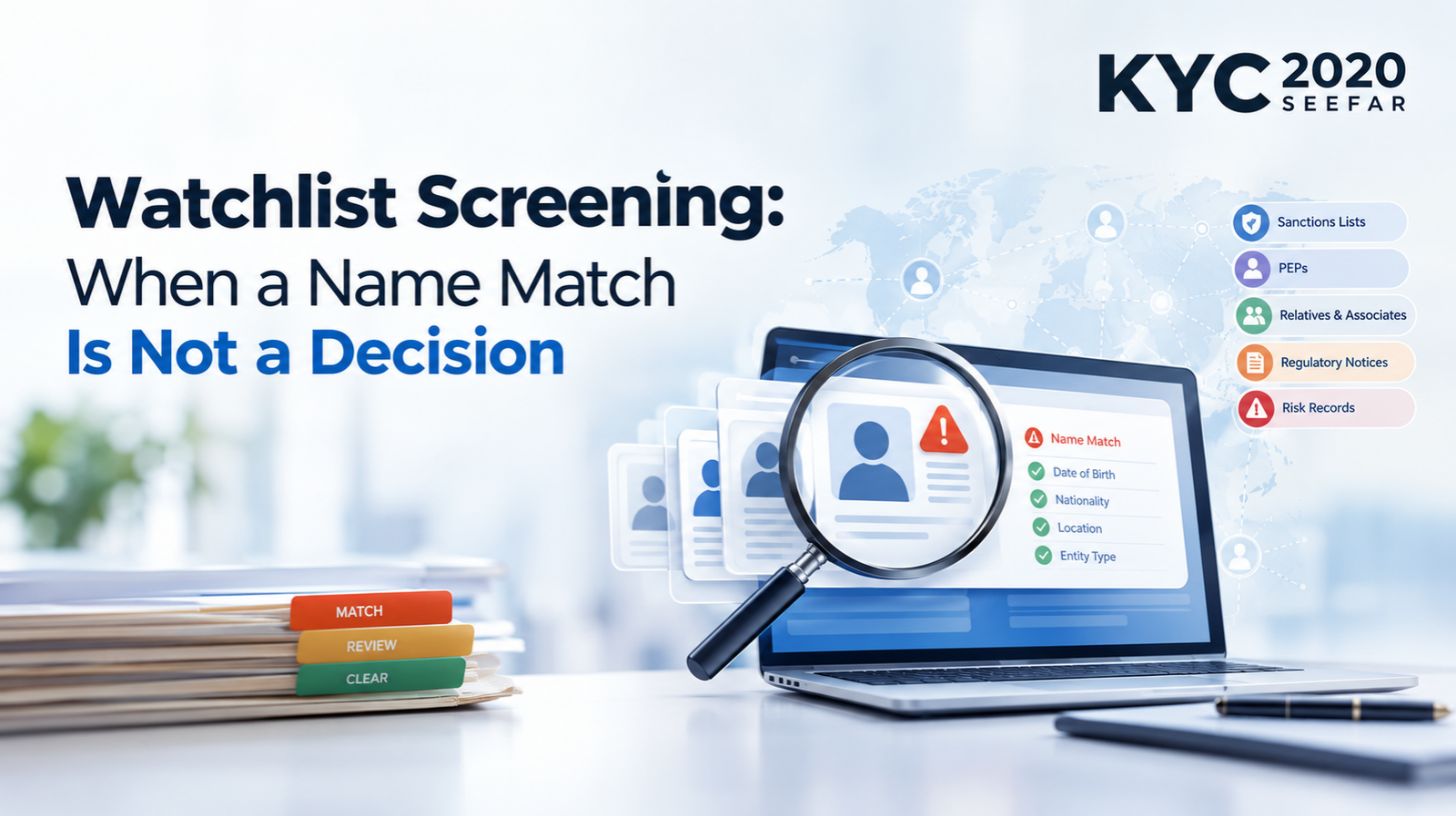
A customer’s name matches a sanctions record. The system raises an alert, but the date of birth differs, and the listed person lives elsewhere. The analyst reviews the available identifiers and supporting evidence before determining whether the alert can be cleared under the organisation’s screening policy. Similar alerts follow, consuming time and obscuring important cases.
This is not simply a problem of too many alerts. It is a problem of interpreting evidence without weakening detection.
Why A Watchlist Screening Platform Needs Context
Screening compares customers, beneficial owners, counterparties or transactions with sanctions lists, politically exposed persons (PEPs), relatives and close associates, regulatory notices and risk records. Names vary across scripts, transliterations, and aliases, while records may contain incomplete or conflicting identifiers.
Exact matching may miss a genuine connection when spelling differs. Broad fuzzy matching can return unrelated people.
A Name Relevancy Scoring (NRS) system helps rank potential matches, but a score alone cannot establish that two records describe the same person. Date of birth, nationality, location, entity type, and other identifiers must be assessed together, with missing information kept visible.
Why Reducing False Positives Can Increase Risk
Imagine tightening a matching threshold to shrink the alert queue. Some irrelevant hits disappear, but a genuine match with a transliterated name may also fall below the threshold. Lower it again, and analysts face more weak matches. This is the recall-versus-precision trade-off: increasing detection can raise noise, while suppressing noise too aggressively can hide risk.
The answer is not to force one model to solve every problem. Screening should identify possible matches consistently; contextual analysis should interpret why each record may be relevant. When evidence conflicts or remains incomplete, the system should preserve uncertainty and route the case for review instead of treating a score as a verdict.
Use AI Without Surrendering Decision Control
Contextual AI can help distinguish a listed person from someone mentioned as a victim, witness, associate or unrelated namesake. But an AI-generated explanation is useful only when grounded in evidence. A workflow should require supporting source details, apply rules, flag uncertainty and retain human oversight.
KYC2020 combines contextual analysis with rule-based decisioning and a documented Proof-of-Decision record. This makes recommendations explainable while keeping outcomes governed by established rules and authorised review—not allowing a probabilistic answer to silently determine compliance.
Frequently Asked Questions
- What is watchlist screening?
Watchlist screening checks individuals and businesses against sanctions lists, PEP records, and other relevant risk sources. - Why do watchlist screening systems generate false positives?
Similar names, spelling variations, incomplete identifiers, and transliteration differences can produce irrelevant matches. - How does contextual analysis improve screening accuracy?
It evaluates names alongside identifiers, source information, and surrounding context to distinguish relevant matches from coincidental similarities. - What is the difference between fuzzy matching and contextual analysis?
Fuzzy matching identifies similar names, while contextual analysis evaluates additional evidence to assess whether records refer to the same entity. - Why is ongoing watchlist monitoring important?
It identifies relevant changes in sanctions status, PEP exposure, and other risk information after initial customer screening. - How can compliance teams reduce false positives?
They can improve data quality, calibrate matching rules, assess multiple identifiers, and prioritise alerts using contextual evidence. - Can AI make watchlist screening decisions independently?
AI can support analysis, but consequential decisions require appropriate controls, documented evidence, and authorised human oversight. - What should a watchlist screening audit trail include?
It should record source versions, identifiers, matching logic, supporting evidence, reviewer decisions, and relevant timestamps. - How should businesses evaluate screening platform performance?
They should assess false positives, missed matches, review times, escalation quality, data coverage, and audit findings. - What features should businesses look for in screening software?
Important features include reliable list updates, flexible matching, ongoing monitoring, case management, integrations, access controls, and audit trails.
Make Every Alert Traceable And Testable
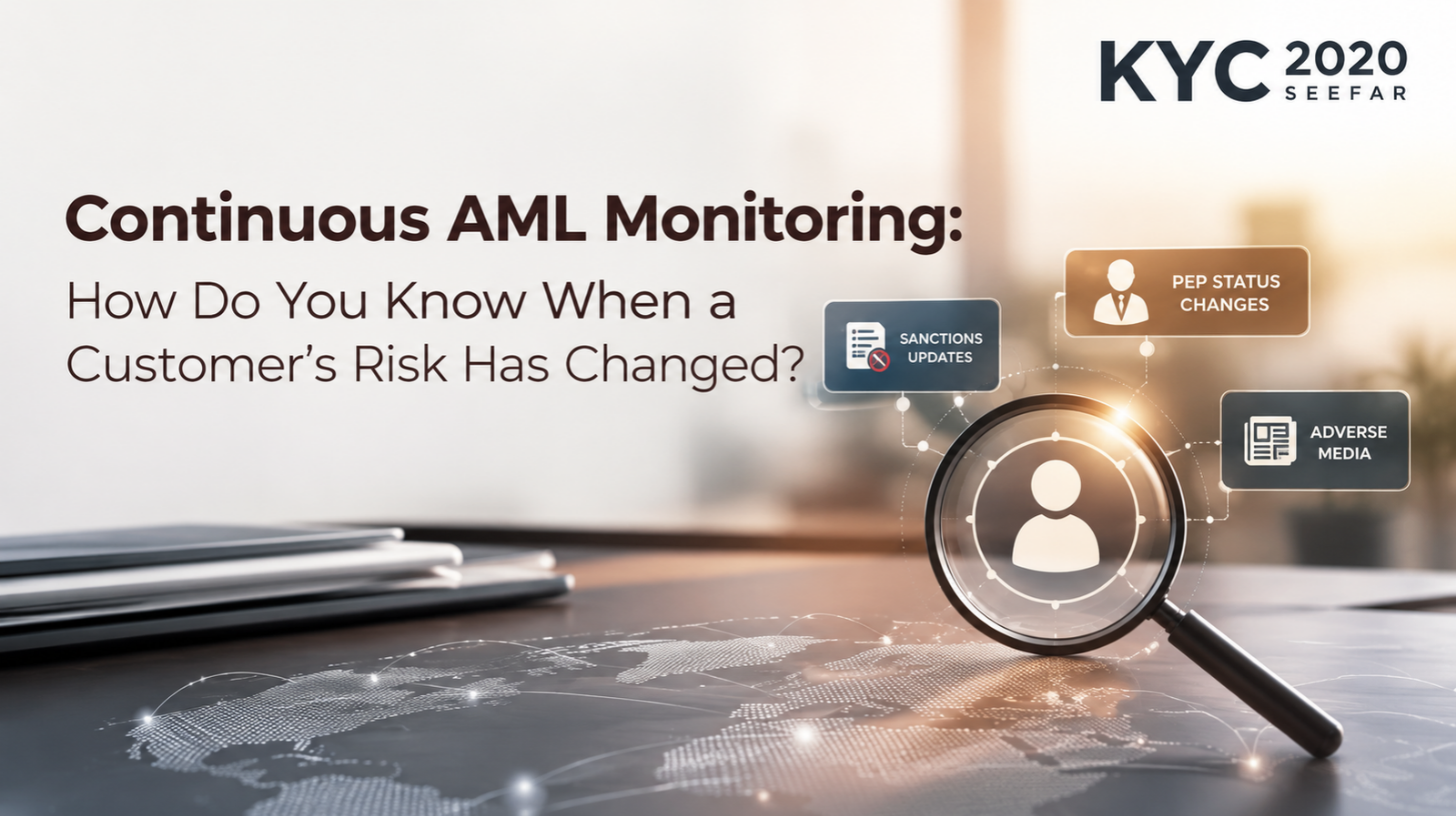
A defensible record should show the source and list version, identifiers compared, matching logic, evidence considered, reviewer notes, disposition and timestamps. Case management, role-based access and maker-checker controls support consistent handling. Ongoing monitoring matters because watchlists and customer risk can change after onboarding.
A watchlist screening platform must be tested with common names, transliterations, incomplete records and known matches. Track false-positive rates alongside missed-match testing, escalation quality, review time and audit findings.
The goal is not zero alerts. It is to identify meaningful risk, explain why a match matters, and preserve a decision that can be reviewed later. Strong screening combines reliable data, contextual interpretation, consistent rules and accountable human judgment — so analysts spend less time clearing noise without losing sight of the risks they must detect.